Very stupid question, but I see that almost all the shunyata and other conditioners use 20a C19 plug, is it safe to just go to a C19 to the typical 15a plug on a 15a circuit? I would assume it’s fine if I stay within the limits of 15a since it’s not an active device but I just want to make sure
Yes, the cable will only deliver what’s coming out of the wall. It’s just rated to channel more.
3 Likes
How much amperage do you have coming in? Older homes if lucky have 150amp service. 200 amp service was standard for a while in Va where I live and 400amp was an option I wish I had been able to take when I was building my home.
Even at 200 amp modern home requirements for folks who really like their technology can be limiting.
2 Likes
It’s probably quite small, I’d guess 100a but I’ll have to check. There’s honestly not much in the house that takes a significant degree of power aside from AC in most cases, the only things that commonly run aside from that are just a desktop, some networking equipment, a fan, and a fridge lol
2 Likes
Ok, the good thing about a smaller service is that hiring an electrician to come in and completely freshen up the panel with a new panel, good copper bus bar, fresh, new fuses and simply redoing connections that are possibly 20+ yrs old is worthwhile. It’s also a great opportunity to look at some of the above average grounding options available for home audiophile use at your panel and have it all done professionally. I would do THIS before spending money on audiophile regenerators etc. Start at the panel, if the house is a reasonable size it may even be an opportunity to dedicate a circuit or 2 to your audio equipment. 
3 Likes
I think what I’m going to do is grab a conditioner first, and then consider redoing everything. What makes me hesitant to invest in that is because I’m not 100% confident that I’m going to stay at this place and may consider moving for work if an opportunity arises in the next year potentially. Would hate to redo everything only to end up selling the place (to someone who would not recognize the value in what was done lol). There’s other incentive to move considering every room in this house is acoustically terrible for speakers lol
That’s mostly why I’m more conditioner/regen/isolation focused right now, despite as everyone points out that refreshing the entire electrical system would probably be a better first start, I just don’t want to lose my investment if something changes in the near future. I had more confidence that I’d be here for awhile, I’d be doing what I did at my last place (dedicated high quality panel for audio gear, multiple circuits, very high quality internal wiring and receptacles, upgrading service, etc). At least I was able to set aside a dedicated newer run, and reduce other potentially noisy things in the house (there’s too many florescents in the house that I pulled out lol), and confirm that the most basic things are right and safe, but the cost to redo everything or really go too deeply into things beyond that exceeds the cost of the level of conditioner I’m considering a lot, and I can take it with me or sell it instead of just eating the loss on moving. Not ideal, but it is what it is lol
4 Likes
Hello, I randomly found a Transparent Cable Distributor Here In my city, and I compared the prices to the ones on the official US page and to my surprise, the costs are very very good, as if they didn’t charge import or distributor fees. And they even have promotions from time to time.
As ive read from this thread power conditioning can be a bit of an ordeal.
Im running a Fuman PL8C Plus which is a lower tier unit but I trust it enough to protect my gear from electric surges which is why I got this model.
Ive been thinking about upgrading it for some time, the brands I really liked are puritan and shunyata, but whenever a good used one popped I didn’t have the funds.
I added 2 ifi AC ipurifier to see how my system would react and to my surprise it was very noticeable and did reduce AC noise specially on my OTL Woo Wa3. I wonder if I should add one more? originally I just wanted to test the AC Filters and now I wonder if I can get further improvement
My Power Conditioner is still rather crap still, so this very nice looking compact affordable power conditioner (1k) called my attention… The thing is I cant find any useful reviews on the net, and no one in this forum has mentioned this product.
Transparent Cable Powerbank 6
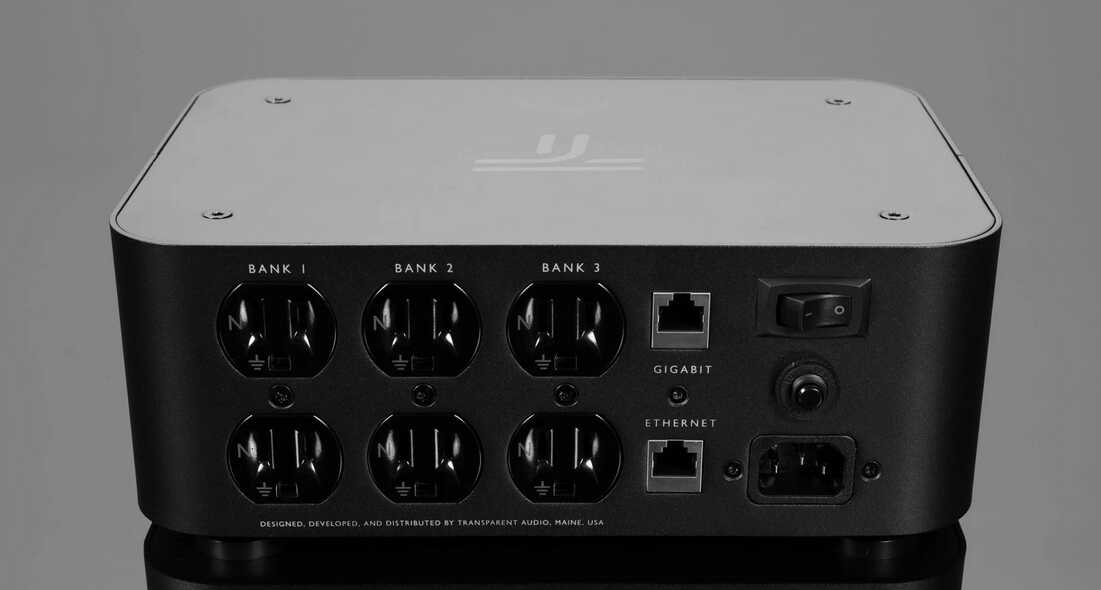
and the description really sells me on the product:
“Transparent power products remove line noise and modulation distortion, while also suppressing surges and spikes without the use of transformers or other series filtering devices which limit current capability and can add distortions. Our unique power products are the most transparent way to clean up the power going into your high-end audio and video components for cleaner sound and picture coming out.”
As well as:
-Avalanche diode surge protection never wears out
-Non-current limiting noise rejection filtration
One worry is that I have to measure if some of the beefier power plugs would fit as this is quite the small unit, I could keep the furman for my other electronics since im using regular ass power strips for those, and the Transparent for the Audio Gear, and if it turns out to be very good I could get another another so every device fits.
Do you guys think this is worth trying out or should I still be looking at the puritan and Shunyata conditioners that pop up used from time to time, at almost the same cost or more.
Happy New Year all, this is a nice video to watch when… what else is there to do today?
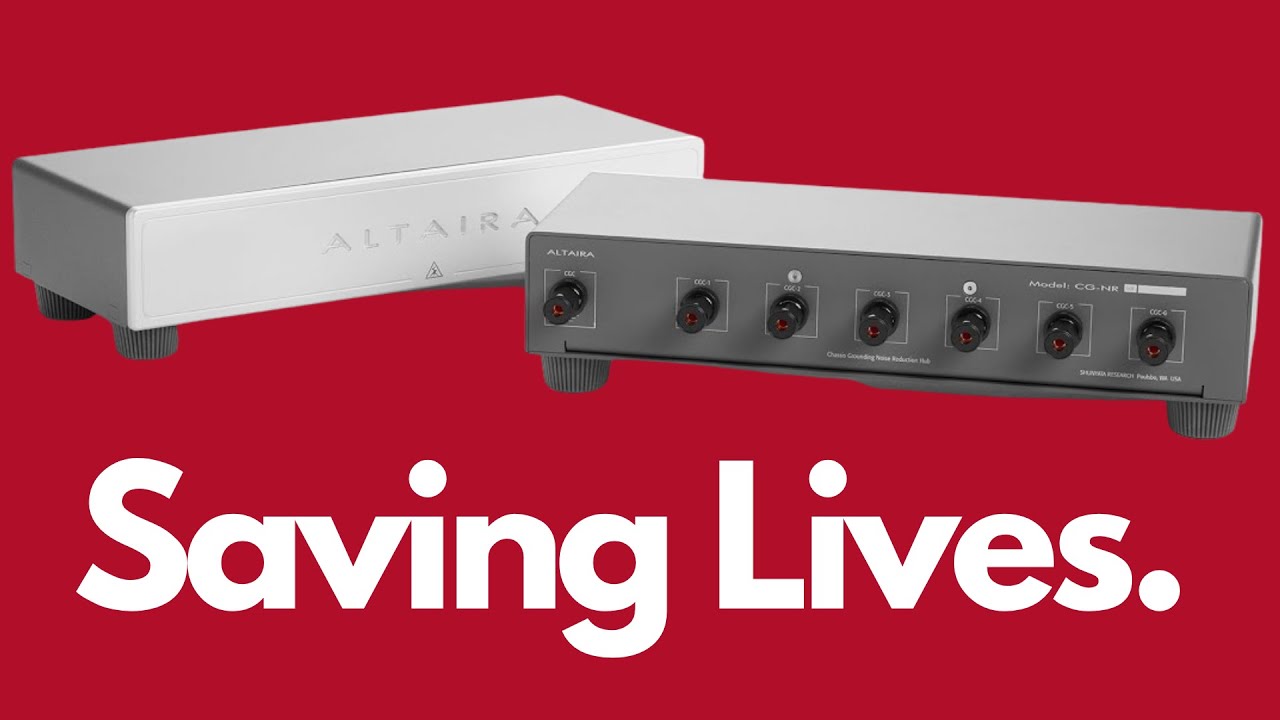
I’ve actually invested heavily into the Shunyata ecosystem. I’ll wind up getting the Altaira chassis grounding system for my chain eventually. This clip encapsulates some history and research of Shunyata and why looking at power holistically is the only way to get the most gains. Otherwise it’s simply piecemeal. The first part includes some very cool music industry detail about Shunyata getting their start.
They’re expensive, not gonna lie there and some of their highest end stuff is just stupid expensive, but there is always gains. Every step up is really a step up and often a V2 version of a middle of the road product is better than the top of the line product of handful of years back. What that means though is that there are always great pieces available in the used market and you can always find things for less than $0.50 on the dollar off their retail in the used market. The only way for po’folk like me to be able to afford the higher end of the hobby. lol
It’s worth sitting through the whole thing.
It’s frustrating when I look back now knowing that the place to start in the hobby is with a $2k conditioner and $1k worth of power cable. IT SOUNDS CRAZY! Good luck convincing anyone to that but it’s the only way to get the absolute most out of whatever equipment you buy after that. Until you’re ready to upgrade your power again, rinse, lather, repeat.
2 Likes
@MazeFrame @Gothique @Polygonhell
Posting to the forum EE brain trust as I’d like to see if you guys think this is a generally adequate request for a design to install AC protection to a building that currently doesn’t have anything. There are a number for $250k to $350k HVAC and elevator control room electronics. Last year a weird surge situation in our neighborhood cost us about $60k in replacement electronics.
I’ve got zero experience in any of this, but I’m handling the project and hiring an EE design company. I guess the ask here is… is this what I should be asking the design company to design? Should I specify something “beyond” surge protection and are there any other keywords I should add to the request?
As of 2020 all new construction in the US requires some sort of protection at the main distribution box, be it commercial or residential. The building is grandfathered but if the cost to implement this and given the expense we had a year and a half back, it’s at least worth it to get design plan even if we decide not to implement it.
- Base - Surge Protection – Full Building:
a. Install a protective device at the main secondary switchboard/service disconnect
located in the lower-level mechanical room that contains (1) 2,000A and (1)
1,600A circuit breaker for building distribution. - Option #2 - Surge Protection – Secondary Building Distribution:
a. Install a protective device at switchboard ‘MDP-A’ located in the lower-level
electrical meter room that serves dwelling units and various building core power.
b. Install a protective device at switchboard ‘MDP-PH’ located in the mechanical
penthouse that serves core building mechanical equipment (elevators, chiller,
boilers, etc.).
i. The building standby generator is also located in this room, with normal
power supplied to the automatic transfer switch by ‘MDP-PH’. - Option #3 - Surge Protection – Critical Equipment Redundancy:
a. Install a protective device at panel ‘EDP’ located in the mechanical penthouse
that is the generator power distribution panel.
b. Install a protective device at panel ‘ELP-LL’ located in the lower-level electrical
meter room that is noted to specifically serve the Fire Command Center
equipment and other critical life safety, access control, and security.
c. Additional locations may be determined or recommended upon completion of a
detailed survey.
4. Option #4 - Surge Protection – General Equipment Redundancy:
a. Install a branch circuit protective device for equipment located on the roof at its
local disconnecting means for the chiller, roof top unit, condensing unit, and fans,
where applicable.
b. Additional locations may be determined or recommended upon completion of a
detailed survey.
1 Like
FWIW my house has a Surge Protector in the main panel, and that didn’t protect anything the day the backup generator service guy managed to run a massive surge through my house.
You could hear/see the surge protectors in all the power strips go bang one after another, the protector at the panel was fine. Cost me a sub woofer, blew a fuse in my SU-8, and left me with a dead generator in the midst of a parts shortage, anything connected to a power strip, or conditoner with surge protection was fine.
4 Likes
I was thinking of starting with “option” three as that would make most sense and we can target specific high dollar components. Your point is very well taken and I’ve heard similar stories.
I guess when it comes to power protection you should treat is like security, layers. But when the first layer didn’t do squat as in your case. I simply don’t know what I don’t know. These are HVAC water heaters are the size of a restaurant Sub Zero fridge and there’s three of them, and they all have I/O and monitoring electronics. The other expensive was the control board for the elevators.
2 Likes
Me either I just don’t know enough about what’s available for building level Surge protection.
It’s extremely unclear what the Generator service guy managed to do that would cause the massive surge, and it’s possible because of the way my house it wired, that bypassed the protector on the panel. It could also be it’s only designed to filter transient spikes rather than a sustained surge.
Your probably better off having a conversation with a contractor (or better yet at least 3 contractors) to see what their opinions on what’s available and what if it would have made a difference. Some of them are honest enough to tell you when your wasting your money/time.
2 Likes
So reaching back into the mists of when I was an architect, plus a conversation with an electrician I know this is what I would say:
in a complex whole building system with key services you generally want them to be isolated from each other. You have mains come in and then split to several master breaker boxes. So ideally I think your mechanical room needs to be treated as a separate zone with its own master breaker box.
Beyond that fairly general info as @Polygonhell says, get three contractors to have a look and make a detailed proposal with costing.
This sounds very likely the surge was fast transient. If it had a standard breaker upstream which is usual practice then it might not trip fast enough to prevent the surge spilling over into other circuits. Most main panels now get a Residual Current Circuit Breaker on the input side, followed by traditional breakers per circuit. I installed a sub panel in my workshop space with a RCC and a traditional breaker on it in the hopes of avoiding exactly the situation you had. I want to try and prevent any power surge going back into the mains circuit of the rest of the home. It was explained to me that generally the breaker that trips first will be the fastest or if they are equal the the one furthest upstream. So to avoid it being the upstream one, I needed a RCC. It hasn’t been tested in anger yet so we’ll see how it holds up.
3 Likes
The building is about 20 years old now and given modern code the major points are set up precisely as you describe here. What we’re asking for is a proposal from a design house that does just this, which we can then take the contractors to get bid on. As Poly says, they’re likely going to be the ones with the ear closest to the ground on what works best.
Thanks guys for the sounding board it’s nice to be able to just sanity check yourself, especially since this is way out of my comfort zone.
3 Likes
There are distribution level surge protectors, and while they may help, I would put important/expensive devices behind their own protection.
For stuff that is really important/expensive, consider a double-conversion UPS.
3 Likes
@Camus …
 i swear, read above. Is he a brilliant evil genius dedicated to the hobby or not?
  This isn’t a coincidence, i can see the smoke coming out of his ears, ass, every orifice.
The keywords you are looking for are, “Bitches, I read about a wise audiophile who had a power line installed directly to his apartment in Japan and I want my power THAT clean too because i need to hear utter blackness and want every last watt i can squeeze out of my babies to be as pure as the snow in Antartica!” . Good luck you evil genius you…

4 Likes
Alternatively there are Synchronous Motor Generators. An electric motor is driven by the power grid and turns a generator that supplies your stuff.
That way the only connection between the power grid and your crown jewels is a spinning shaft.
Downside is the noise of a generator spinning at 3600 RPM (depending on winding arangement), which can be solved by building a brick shed.
1 Like
What about a donkey powered drive wheel powering a generator, complete decoupling and quiet (as long as the donkey is fed)?
3 Likes
I have some concerns about the frequency stability of donkey-power.
2 Likes