I think this is a dumb question but i dont want to risk anything so I want to get either the Audioquest Niagara 3000 (10A) or Niagara 5000 (20A). My wall sockets are 13A.
Is the rating on these conditioners for a max load or the amperage should match the socket? It says on the back of the 5000 (20A max) with the big plug style cord socket.
Basically can i use this 5000 with 20A safely on my socket?
Yes, it’s safe. It just means that it can handle input AC current of 20A max. The relative output voltage and amperage you get will be the same as the input voltage and amperage.
Coming back here as a follow up post. I just took the Puritan Groundmaster City I’d been using in my 2CH system for well over a year, I threw that into the HP rig as I already had a star ground solution in place there but just grounded right to the AC outlet.
Very noticeable improvement.
Do not neglet your ground game, a lot of meaningful improvement, not a lot of money given what we spend on the hobby. Read through this thread as I’ve documnted my DIY solution.
Now with the Shunyata CGS built into the Typhon, I was able to reuse the Puritan Groundmaster. There isn’t one way to do a grounding solution, and various vendors have very good but VERY expensive solutions out there, this is one area were there’s a lot of improvement to be had with best practice and not extravagant fund.
Like you don’t need to spend $250 on ground cables, take a look at what I did. The only caveat is that they must all be the same resistance, and low capacitance, use quality copper at least 14 gauge and experiment, have fun, improve your chain, on the relatively cheap.
Has anyone ever experienced power conditioner backfeed (I don’t know what word to use here)? I remembered from past experience trying various conditioners and noticing that it was causing other equipment that wasn’t connected to it to buzz/hum, including an electrical panel in one instance. Is this just normal with most conditioners from the nature of the load they generate or was my non audio wiring in that house just screwed up/old? It felt like they were introducing noise and distortion into the rest of the house. If that is a known thing, I worry about potentially causing issues with non audio equipment down the line when I’m already working with poor quality power, don’t want to further pollute the rest of the enviroment (and also cause something like a monitor or pc to whine more, negating any positive impacts for a recording environment lol). I didn’t notice this with an isolation transformer or regenrator (at least the ones I tried), only passive conditioners.
Second, has anyone more extensively done the transformer isolation vs conditioner vs regenerator comparison? I’m really sort of stuck, I haven’t really tried many different power conditioners aside from a select few, and just generally indecisive on what I need. I’ve got a dedicated 15a circuit for my audio equipment, but currently I still struggle with noise from other things in the house and voltage sag, along with the whole sounds randomly better/worse at different times of the day, clearly working with crappy power coming in here. I am very very stuck on what to actually consider for my situation, as it would be nice to both actually solve some of the annoying issues but also give a general lift in quality to the sound of what I’ve got, and I feel clueless of what direction I should really go lol.
My current setup is pretty much a Lyra 2 →Pass HPA-1 but also including a Crane Song Trakker, Flamingo.1, eventual HEDD or Interstellar, a USB reclocker (for now just a HISO + iPowerX) and likely a few more outboard preamps or compressors in the future, so there will be more studio gear going in there than hifi for the time being. I would guess that I’ll need to hit at minimum around 1200va of capacity to be safe, and I say that because I’ve just experienced heavy downsides to not oversizing some power units, so I figure that range would be plenty of overhead to not run into issues and also keep myself at a 15a circuit. I’d eventually upgrade power cables, but right now it’s just standard medical stuff and will stay that way until I can have some of the bigger issues fixed lol.
Right now the things I’m considering most are an Equi=Tech 1.5R or RQ, PS Power Plant P5/10/12, and either Shunyata Hydra Delta or Triton. Also have some interest in a Puritan PSM 156 or Clarus Concerto but I’m more unsure on those for how they could potentially sound. I feel like the Shunyata would have the highest potential to improve the quality of the sound for my setup for the price but might not fix issues, while the PS would be the safest most reliable issue fixer while offering good used value, and the Equi tech somewhere in between? I really don’t know, I wish I gave more of this stuff a shot years ago lol. Anyone have any insight into what might be worth trying first?
If the conditioner uses an SMPS-type setup (= looks like an amplifier inside) without good power-factor-correction to generate its internal DC-Rail, then it would put a very spiky load on the grid.
Easiest way to check would be some sort of power meter (kill-a-watt, etc.) between outlet and conditioner. The closer to the power factor is to 1 the better.
If the conditioner is more of a “traditional”-type (= Huge multi-tap-transformer), then I don’t know either.
Traditional and Modern power conditioning
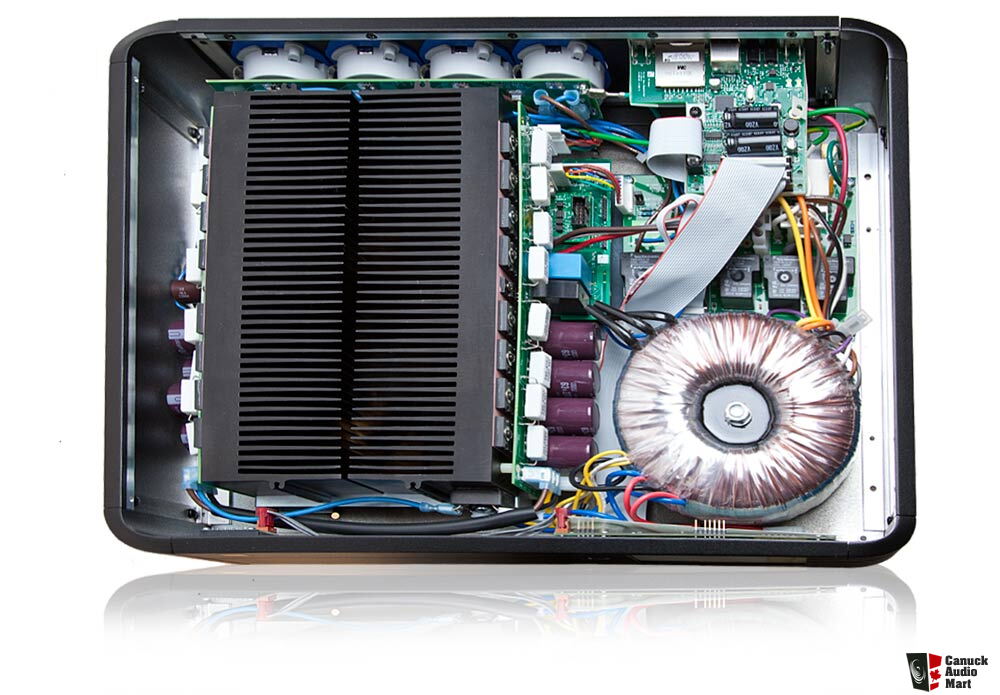
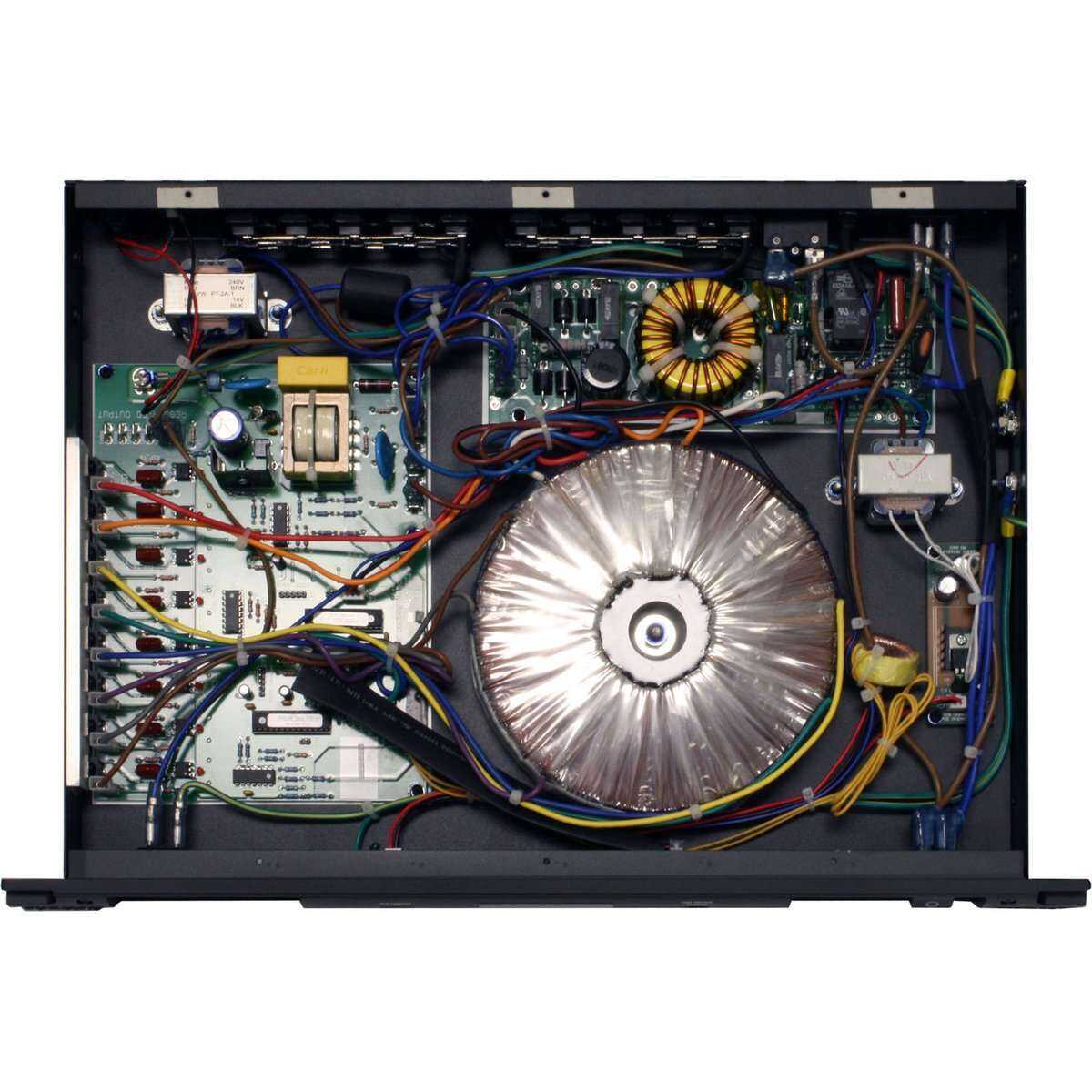
The two types really do different things. The former is closer to an uninterruptible power supply without a battery where it actually turns the incoming AC into DC and then back into new AC. The traditional multi-tapped transformer setups just rely on the transformer filtering High-frequencies out of the power grid with some ol’ reliable analog circuit to select the winding ratio to compensate for voltage sag.
“Modern” setup, much smaller transformer, and what is essentially an amplifier on the left to do the AC-DC-AC double-conversion:
“Traditional” setup, huge transformer that actually handles all power directly, the circuit on the left selects the winding ratio to compensate for voltage sag:
I stand by my usual: When got clean power but you can hear a difference by adding a power-conditioner of any kind, the built-in power supplies of your audio gear are bad.
That’s true, it’s just that most all power supplies could be better in the audio realm, and to be honest the higher and higher up you go, the higher % of what you actually pay for is increasingly better power supplies. I found my Lamm gear vastly better direct into a wall than any sort of other device, but I guess that’s the level you have to be at to have a truly proper power supply lol. I can squeeze more out of my setup and fix some issues by doing some power conditioning/regen/isolation, so I might as well do so in this case
Honestly man, spend a few bucks on a good old school local electrician to take a look at what you’ve got now. Get a good clean bill of health from them and then move on from there. It’s probably pennies on the dollar spent there first and THEN you at least know you’re good with whatever else.
There’ could be issues in the house, DC current, reversed polarities, bad or non existent grounds.
Might even just be able to buy a good meter and inspect it yourself before you bring in the electrician. I only say this because your suspicions about bad power may be well founded, so why not start there?
I hate letting people in my house but you’re probably right lol, although I did as a test run my own circuit directly from a panel and it was still crap, confirmed that I don’t have any of the super obvious issues like lack of a ground or flipped polarity, but I also don’t have a scope to measure anything either, just a multimeter. I think the biggest problem is just what’s coming into the house, it was built in the 90s and I had it inspected before I got it, didn’t have anything come back as weird. But, I never had it extensively tested in regards to electrical aside from the basic stuff.
To clarify, the real annoyances are mild, it’s something I can live with, but it’s still there, and it would be nice if they weren’t. If it was something super serious, I wouldn’t try to fix it in this way as the only proper way to deal with it would be bringing someone else in. This is one of those “I think this is limiting the performance of the chain and is slightly distracting” situations, and not “this is unbearable and I’m worried it’s gonna break things if I don’t address it” sort of issues
I am curious about your impressions with Ansuz Power solutions.
I can describe my impressions, but I think I went from PS to Ansuz and haven’t really looked back. It really moved the needle with the house sound that I enjoy with Audio Group Denmark.
I’ve only tried their footers which were great, but nothing else. I didn’t even think to look into them mainly because I just assumed anything good from them would probably be over my current budget lol, along with just a general lack of info.
That’s really one of the reasons why I’m hesitant on the PS audio stuff now, they’re good at doing what they say, but I feel like they become more of a limiting factor as you move up. I also don’t know if I need yet another strong heat source near my desk which is less an issue with other units lol
Doesn’t the PS audio stuff have a report that’s generated on the electricity coming in? Maybe if you can get a hold of one of those, even as a loaner and see what the unit says about the state of the input current?
When in doubt then look at the house ground! Ground doesn’t mean great ground, so that may be worthwhile looking at. If the house is built in the 90s then at least you’ve got stuff built to code, so yeah it makes sense that you don’t have stupid stuff going on inside the house. That’s probably where most of the expense would have been.
You can also complain to the public utility and they’ll redo your connection to the street!
That’s a good idea, but at that point I should just buy a proper scope lol. I’ve got one sitting next to me at work actually, but I don’t know if it works and how to safely use it on AC so I’ll have to figure that out (a goldstar os-9020p rescued from the dump).
I am tempted to go with a PS just for the peace of mind that everything will be consistent and just work, but I still have the desire to try something new for larger potential gains for around the same money lol
The Shunyata ecosystem game me better results, I think anything with their component to component separation is the level you want to be in. The reason I mentioned the Hydra Triton V2 is that it also includes the chassis ground cluster and I was surprised how much difference that made for my HP rig when I connected each component to it. I was previously using a copper buss where I was grounding everything to connected to a Puritan Groundmaster City.
The The Denali & Triton combo is superior but just needlessly expensive. The Puritan was good, the one I had even had upgraded caps from Puritan as they used it for shows But the Shunyata stuff was > benefit. One of the things that the Puritan is supposed to lag on is that component to component separation but other than that I believe it was solid just not at the Denali level. I’ve gone Shunyata with all of the power cables which probably is making an impact as well, been using the NR stuff on the DAC, the streamer and the Mojo Illuminati. I tried the NR cables on the amp and on the preamp and it killed their dynamic and magic so I stick with using the Std. cables.
Also a very under the radar cable has been the Synergistic Research Foundation SX 10 if you spot one of those. They can be had for under $400 and don’t have the same resale value as the more popular brands. I’ve compared it to the Shunyata Venom and Delta lines and was liked it more. For my 2-CH though I’ve used the Alpha and Sigma V2 lines. That’s the thing with Shunyata, they do get noticeably better up the food chain just f’ing spensive! lol I don’t buy anything unless it’s got a deep USAM discount on it. Couldn’t afford it otherwise, and a little bit of patience goes a long way. The nice thing about power though, is when you’re done, you’re done.
Given your situation though the PS audio stuff may be a safer bet for you until you figure out what’s going on in the house.
Last summer the building I’m in was hit by a brownout. It affected large portions of the city and it was weird as it wasn’t a blackout things in the apartments blinked and flickered and did weird stuff. The controllers for the elevators in the building friend, the controlers for the boilers, people all over were complaining about issues with their electronics. In total over $100K in damages to the building systems.
I’m working now as part of the board to implement a protection system so we’re having a study done and pricing out bids. The exposure to these kinds of issues is very real!
Thinking about it now though absolutely nothing happened to any of my chains.
I was already pretty heavily leaning toward shunyata for a conditioner, thanks for the info. I do like the sound of their cables but they are generally more pricey than others (my cheaper favorites are the TWL and SR cables). Now it’s just a matter of deciding shunyata vs ps vs equi
I’ve never really messed around with the localized grounding stuff, seems interesting and would be easy to do I guess to experiment.
That’s great nothing happened to your setups, some of the occasional brownouts I get here sorry me, so another reason to consider at least some sort of extra protection lol
It’ll be a ground issue, probably in the house wiring, there isn’t much that a conditioner can do to “cause” that. Maybe some unintended connection from Neutral to Ground, while Neutral should be at ground potential it isn’t necessarily ground at the house and it doesn’t take much to get a lot of current to flow between the two.
If your panel is buzzing, you really do need to have an electrician look at it, it’s probably a loose connection or something arcing in the panel, and that’s not “safe”.
I never got any value out of my isolation transformer (it’s not even plugged in ATM), the regenerator was considerably better in my use case, I haven’t tried a really good isolator.
Separate circuit just pushes the connected together to the panel, it can be useful, but if the voltage into the house isn’t stable it won’t buy you much.
Got it, glad I don’t really have that issue now, but the house I had before was considerably older and that would happen on my non new non audio dedicated circuits (but nothing on the side I set aside for all the stuff I cared about lol)
I had an isolation transformer for all my studio equipment in my past place and it was great at preventing any sort of ground loops between equipment, but it never made as noticeable of a difference as I would’ve hoped in fidelity, but considering the amount of stuff plugged in and the typical recording chain that stuff can sometimes get marginalized in a way that doesn’t happen in hifi lol.
I was thinking about it and I am more leaning toward conditioner or regenerator, the equi and torus still appeal to me since they seem to be sort of like isolation transformer + some filtering, but I guess the whole reason you’d want those would be if you think balanced power is the way forward. I don’t really know, so maybe it’s best I just focus on things that are more assured to at least offer more filtering rather than transformer isolation. Not fully sure.
I’ve basically tested with literally everything unplugged or turned off in this house (even my radon system and fridge and stuff lol) and I’ll still get the same sort of variability in performance depending on time of day and sometimes mechanical hum from some devices (sometimes not). When not doing that, I do have pretty significant sag whenever my ac kicks on and some noise from that regardless of the circuit. I think I’m just stuck with less than ideal power coming in, and maybe not enough of it as well lol. From that, I’m really leaning more toward regen or conditioner over isolation transformer (but the idea of balanced power still intrigues me a little bit lol)
@Veritas I looked more into the Ansuz power distribution, it seems like it would be a great option if I had more stable incoming, but I feel like there might be too many things fighting against me with what I have considering what their design is going for (they seem to really focus on more minute/lower level correction and shaping + bypassing protection and anything that restricts flow, which sounds great for scaling and really getting the most out of what you have incoming, but I just worry that it might be too hands off for my needs considering my incoming seems pretty bad lol)