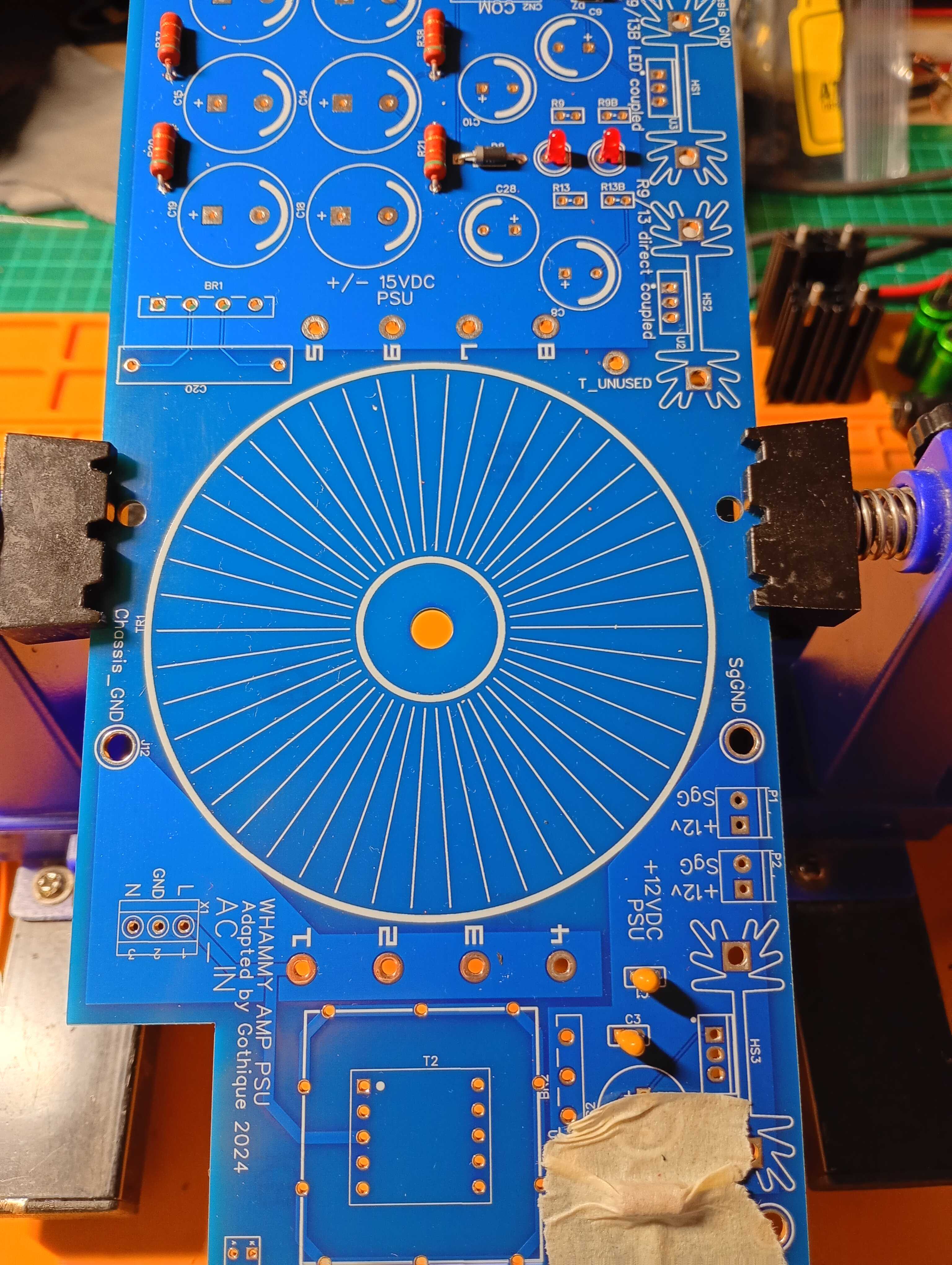
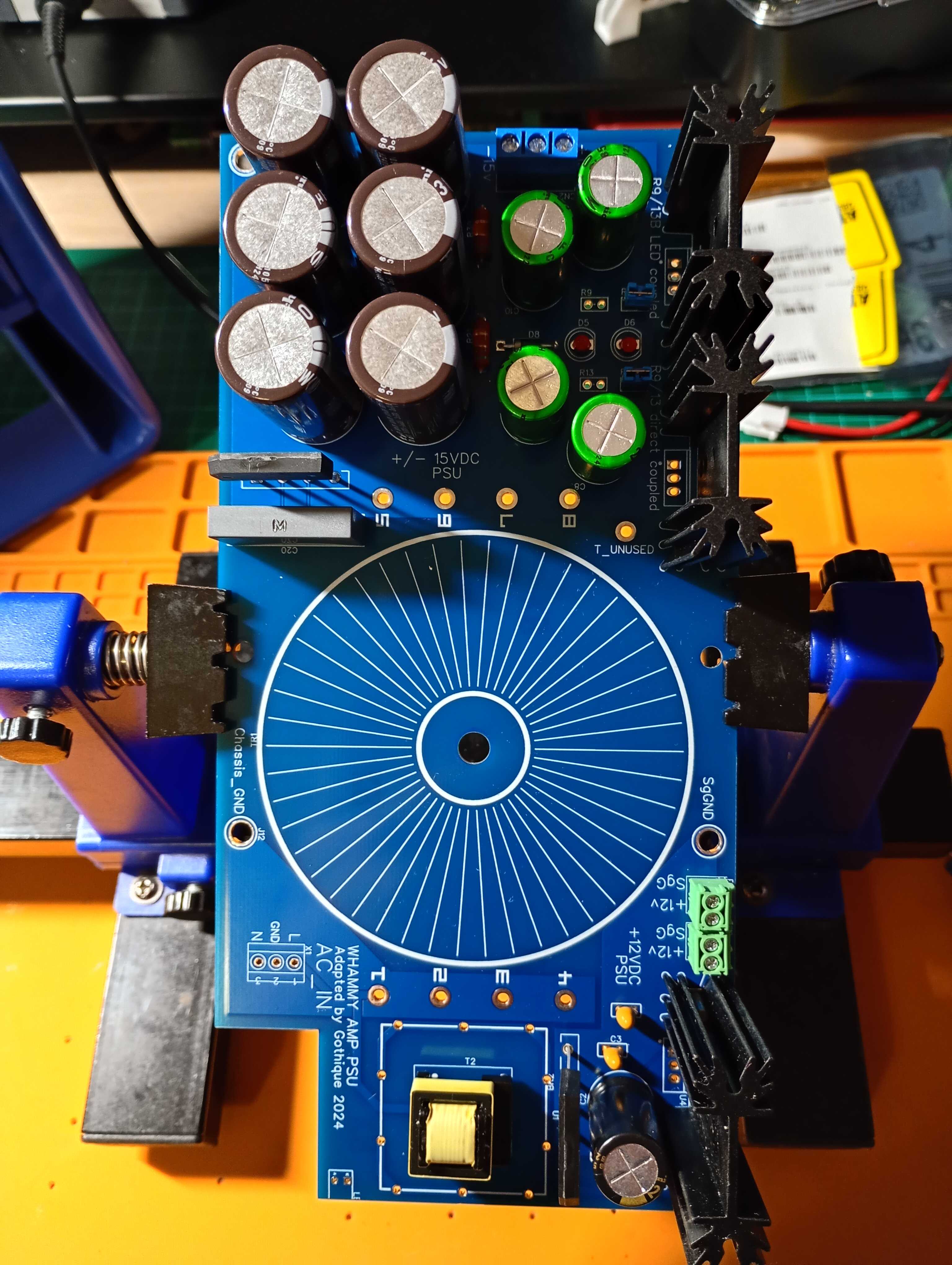
Over the last four to five years I have very much enjoyed the Whammy HPA I built back in 2021. I did also have the occasional issue with it. The lack of front panel power switch led to me getting a custom FP so I could fit one, as well as adding a power indicator light.
More deep seated items for me have been that having the power supply on the same board and so close to the audio path means it is very easy to have audible interference turn up in the background. Shielded power cables help with this but still, not ideal.
More of an issue has been that there is very little clearance around the opamp which limits you pretty much to standard format DIP-8 chips. Anything else needs a riser which is far from ideal.
Lastly the default specifications have quite a lot of gain meaning that any headphones with a low impedance or IEMS have almost no volume pot room at all.
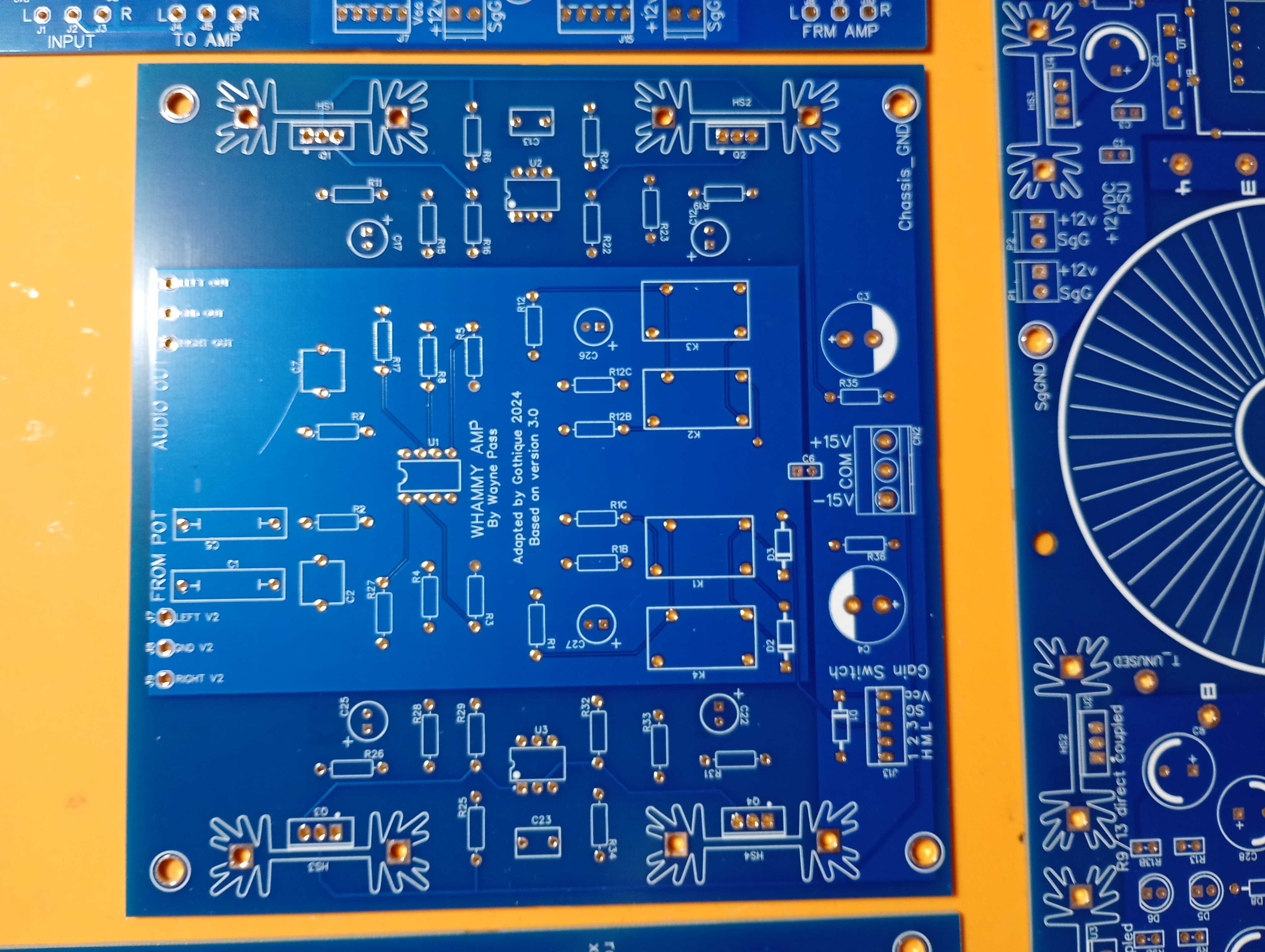
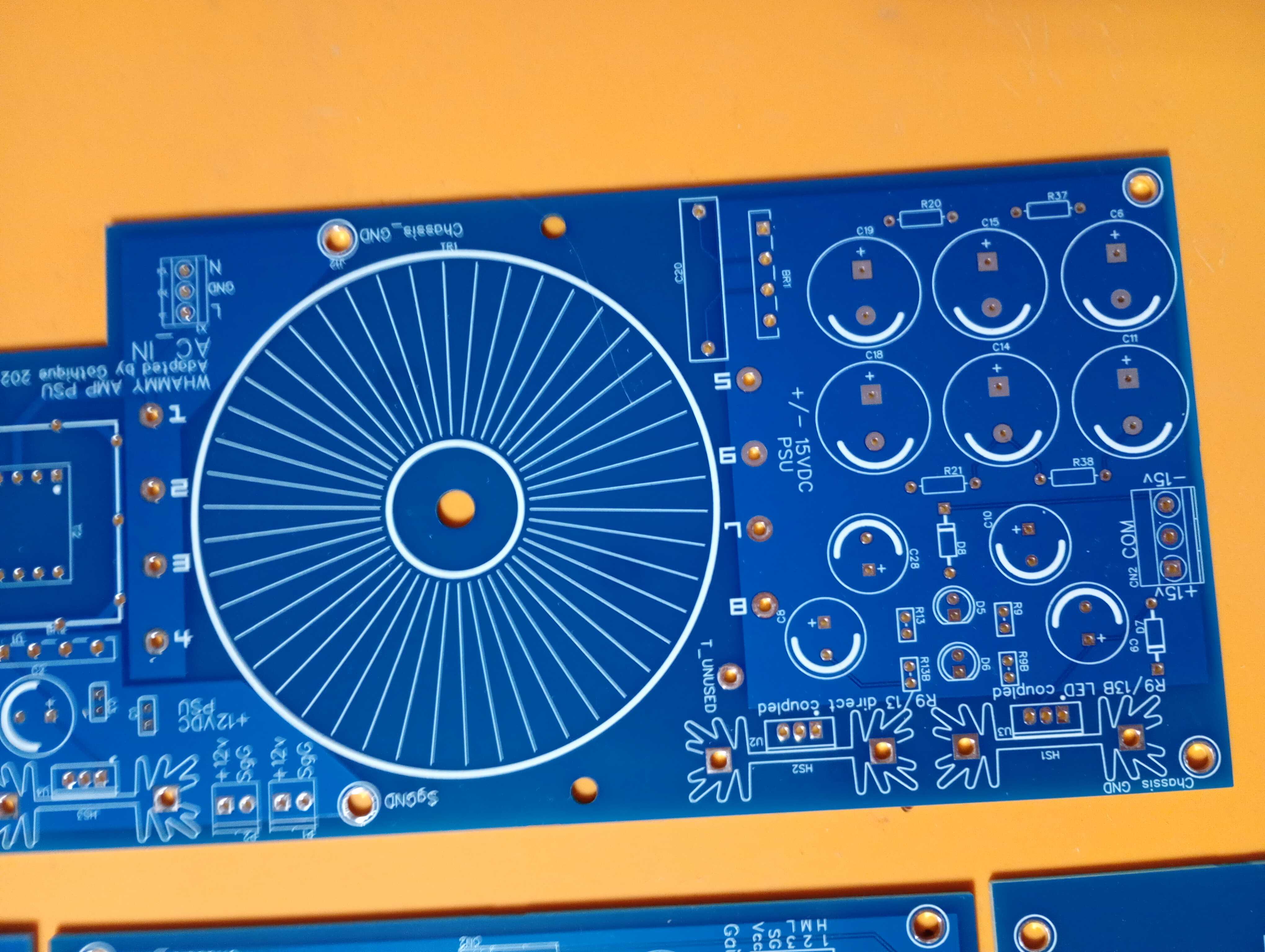
So I decided to make my own version. I wanted to split the power section off, allow for switchable gain settings and try and make a shorter audio path with more space for larger boutique opamps. I spent about two years copying and redesigning the schematic, testing my pcbs, redoing them. I designed a small 12v supply for the front panel and relay switches. Added in balanced inputs with a transformer step down as an alternate input and dropped the rca output entirely.
Then I started sourcing all my parts so I can build my personal, definitive Whammy. It took a while as I decided to get the best components I could afford - I don’t plan to build this again so it might as well be as good as I can make it! On the whole the parts in the original BOM are of excellent quality so it was mostly just a tweak here or there. Middle of last month I finally had everything ready and now I can start building.
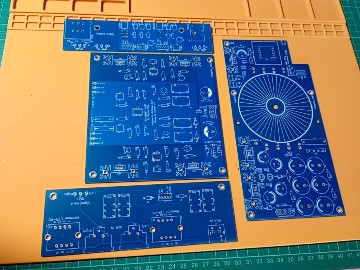
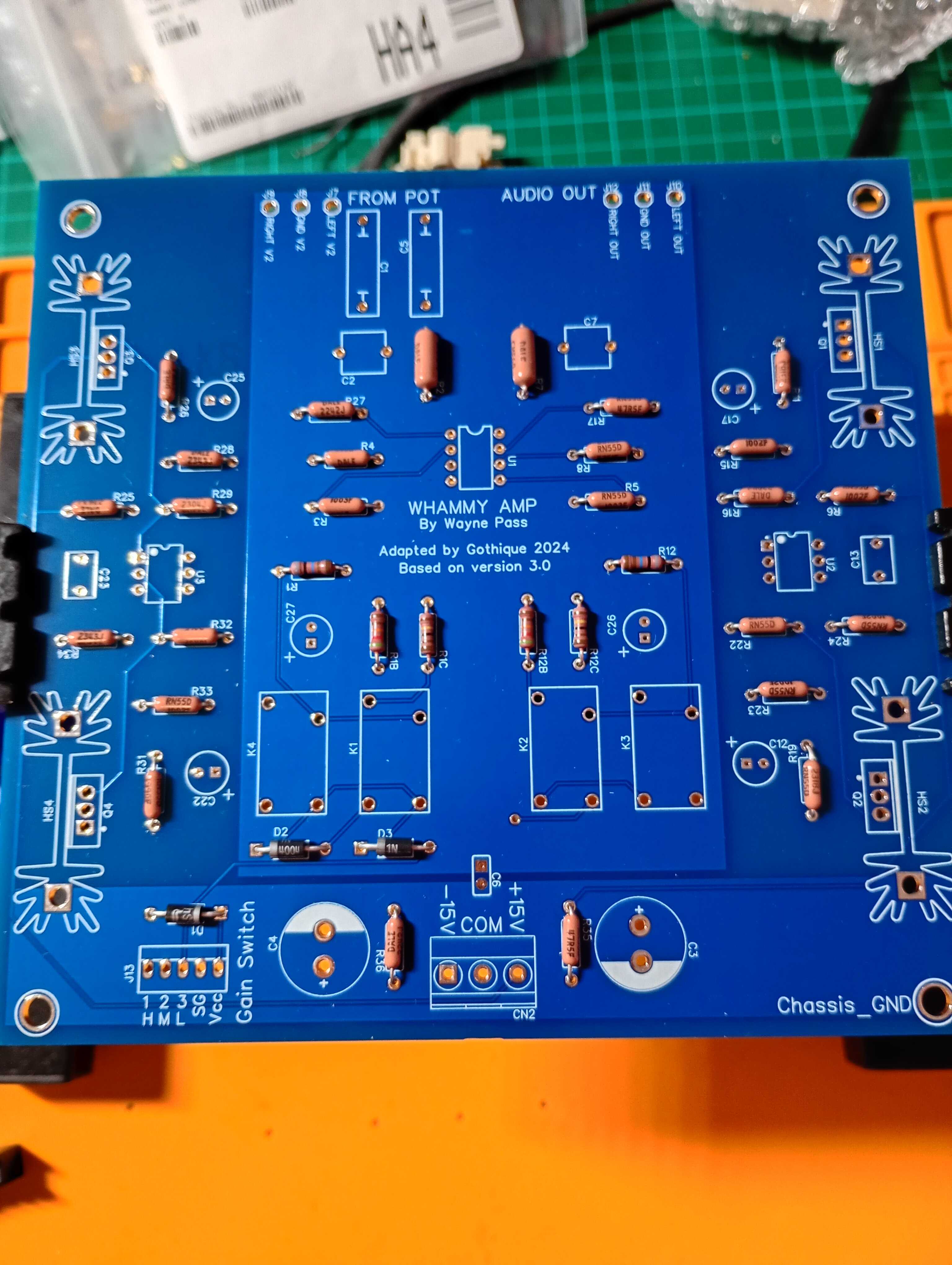
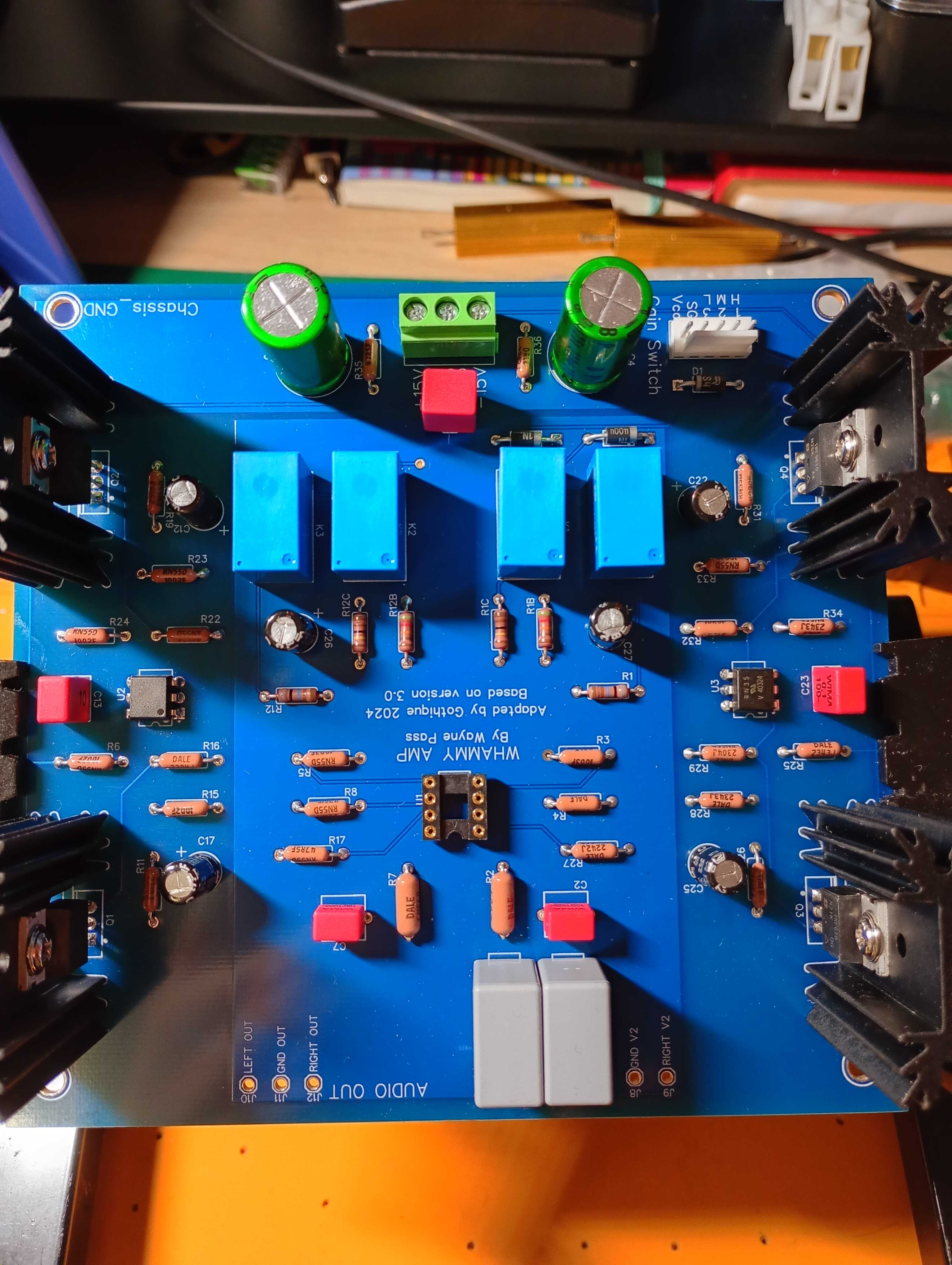
From top: front panel board, amplifier board, inputs board and to the right, power supply. The inputs are relay switched as are the gain settings. There are three, low, medium and high ranging from gain of roughly 1.8, 4 and 7 (the last is the default specification). The gain is determined by resistors that are not in the direct audio path. This makes it possible to avoid having a complete switching break in the circuit that could lead to pops and other headphone unfriendly artifacts by making use of parallel resistors for mid or high gain.
So there we have it. In theory it should just be a case of assembling it all now, but as I have not yet been able to test all the elements together, you never know! My plan is to build the amp, the psu and then front and back panels. Testing as much as I am able as I go. Once all are built I can get them mounted on something for a proper final test before hopefully being able to move on to housing the amplifier.