
While pondering on my new DAC, I have just been using DAPs straight into the THR-1. Just plugged my R4 in this afternoon and I must say, this thing never ceases to amaze me. This combo sounds brilliant. R4 may not have the amp to push IEMs like Cadenza 12 and Timeless well, but that must be it’s only weakness.
7 Likes
Hi!
I recently upgraded my amplifier to the Cayin iHa-8, and my ADX5000 (with the original Audio-Technica balanced cable) now sounds noticeably more detailed and warm. The ADX5000 presents music as if I were standing right on stage.
I’m now looking for a used transport and DAC that deliver the following sonic qualities for 16/44 files, listed in order of importance:
-
Ultimate control and grip (PRaT)
-
Speed / immediacy (not necessarily hyper-detailedl)
-
Huge, enveloping soundstage with great openness
-
Instrument placement in front of me — at least row-10 distance
-
V-shaped or bright tonal balance
DAC requirements:
Fast warm-up time (<30 min) or low idle power consumption (<8W) for 24/7 operation.
Clocking would be handled by the transport.
I’m currently using an iFi Zen DAC V2, which I actually preferred over the much more expensive Merason Frérot and iFi Pro iDSD, mainly because it offered the best sense of pace, rhythm, and timing.
I’m not a fan of Chord DACs or ESS-based designs — to my ears they render 3D imaging somewhat unnaturally, and instruments don’t sound fully “complete.”
Ideally, I’d like something with a Dangerous Music Convert-2–like sound, but with the soundstage placed further back — at least row 10 rather than row 1.
Transport requirements:
My main priority is file playback from a SSD, SD Card or NAS. Streaming capabilities aren’t important and I don’t care for Roon, DSD or MQA. I’d also like to use an external battery PSU for the transport and keep it free of linear power supplies, power cords or conditioners.
The pi2design mercury v2 and Volumio Rivo Plus seem to be perfect but I have no idea about the sound quality (PRAT and soundstage placement) of the AES output.
Possible configurations:
-
Transport (DAP, music server, streaming transport, SD-card player) + DAC
-
Music server or streamer with high-quality line-out
-
DAP with excellent line-out quality
-
Mac mini M4 (existent) + DDC + DAC
Budget: up to 3k for 16/44 → Cinch or XLR out gear chain.
4 Likes
I’ve been doing a lot of DAC research recently in this price category and I’d say, although I’ve not heard one, a Rockna Wavelight may be one you should research and possibly audition. For your budget you’d have to find used. It’s not v-shaped though.
It may be worth looking at a Terminator II as well, I believe that leans bright.
I can speak to Exogal Comet Plus. I have owned three, great DACs. Not v-shaped or bright but may tick your other boxes.
I’d read the wealth of community articles on here. There’s a high-end DAC comparison article trilogy, as well as the Shit List, amongst the other various reviews.
3 Likes
Go read here, it may help you get a better idea of what will give you close to what you desire in character etc.
3 Likes
Thank you for your replies. I’ve studied the Shit List many times. I’ll try the Convert 2 first, as I’ve read on SBAF that it actually has row-15 staging. It’s a very old product, so the real question is: is there a better and cheaper option on the market today?
3 Likes
I was asking the same question when I was considering a Sonic Frontiers Processor 3 this past weekend. Fortunately, there were impressions here on SA. I wish I had time to travel and audition such items but alas, I’m doomed to blind buy right now. Thank goodness for fellow enthusiasts who post on places like this 
6 Likes
Anyone know if there’s any newer energizers out there with TOTL capabilities and no tubes? I have a KGSSHV Carbon that I have no idea of the build history of and an iESL that I think is dying and I feel like there’s performance being left on the table with my estats. I’d entertain the idea of getting another KGSSHV Carbon with some credentials to shut that voice in my head up about it possibly being some janky nobody build, but ideally I’d like just a zero options box with no volume control, no input switches, just the headphone output. I don’t mind if it’s a standalone energizer with just XLR inputs or if it’s one that needs outside power like the iESL and needs fed by speaker amp banana terminals or XLR4 inputs, I just want something endgame. I keep telling myself to avoid the 3ES Elite because I know I usually don’t like tubes/don’t want to deal with the hassle and expense of tube death if I’m daily driving a tube amp 10+ hours a day, but I guess if it’s just the only TOTL option I’ll bite the bullet.
Newer solid state energizer that came out, I only remember the Ray Samuels B-21 Raider amp from 2 years ago. You have to reach out to Ray for pricing, but I think it’s over $10K and uses a volume attenuator.
1 Like
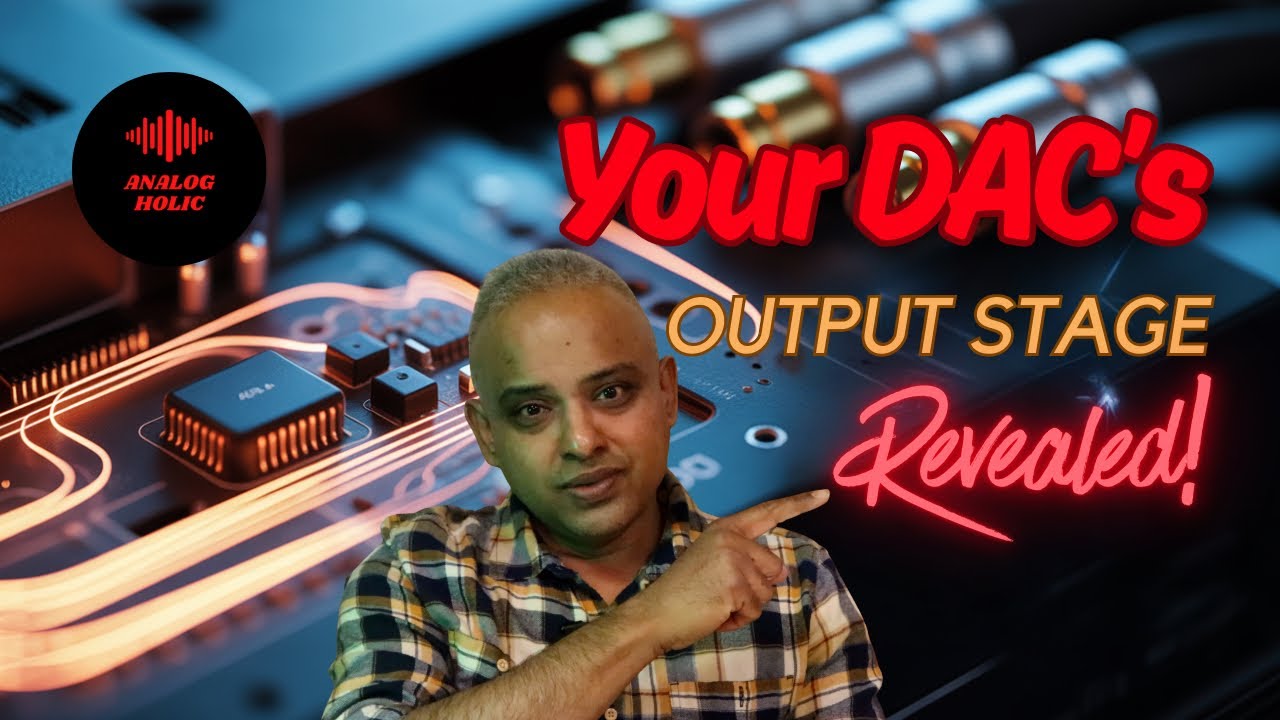
Just watched a really good video explaining DAC and how it get its sound. It really help explain to me why a lot of cheap DAC sound the same when he explain Op Amp vs Discrete and the importance of the I/V conversion stage and the signal amplification stage.
6 Likes
Hmm a friend got an Aic10, and wants to order Pacific 5 (its 5 if you guys missed that upgrade).
The plan is to use 300B tubes and 274B rectifier because he likes those, and lampizator is mandatory because he loves rolling tubes to change the sound.
This will be exclusively for speakers not headphones.
Sonic goal is rich lush midrange and treble that is smooth extended refined but can sparkle (not bright not dark not harsh but must sparkle). And ofcourse good bass but that is covered with Aic and lampi in general.
Are these the right tubes for his sonic goals? Also pacific not poseidon because we assume pacific is more rich etc.
What worries me is @Polygonhell post about the impedance thing. It will be used balanced though.
So need your help before I make him spend, because the order page is open lol.
2 Likes
Hadn’t kept up to date with new releases, I’ll have to look at what the changes are in the Pac 5.
300b’s aren’t the best in the Pacific FWIW, the circuit is not a traditional SE tube amp circuit, and they really just sound slow and muddied to me (though I don’t want to overstate that, they don’t sound terrible by any stretch). I like the 242’s, PX4’s, PX25’s, I also prefer the 5U4G rectifier in it. I’m also a big fan of the pair of C3G input tubes with an adapter.
Other’s have said they don’t have the issue I did with the AiC and the Pacific, to me the combination was just broken, a great example of two components that can sound good not sounding that way together, but given others responses it was likely the 242’s. I unfortunately didn’t think to swap the tubes in the Pacific when I had the AiC here, so I can’t confirm.
I would probably go with PX25’s or PX4’s for power tubes, there are more esoteric options, including some “Postal Tubes”, that can be used with adapters, I have tried a couple of those, but I ended up sticking with the 242’s.
3 Likes
Spent the holidays tweaking my home network, putting my music (Roon) server back on the same LAN segment as my PC as that greatly improved file transfer and management speed. I also spent a bit of time further isolating my PC from the audio realm.
We’ve spent a lot of time here typing away on custom keyboards evangelizing the benefits of getting off the PC and moving your audio gear as far away from the PC as possible because, well it may be the single biggest improvement there is in digital audio playback, and it’s relatively inexpensive.
That said, we spend a lot of time on the PC and for some people it’s impractical or there may be some other limitations as to why they can’t or haven’t.
That said there are companies out there selling a $25k PC running Windows to connect your super duper high end gear to it and they’re apparently doing well with that business model. I’ve described elsewhere that IMO doing something like that is akin to setting yourself the goal of climbing Mt. Everest, but your ascent is going to begin at the bottom of the Marianas Trench. It makes absolutely no sense and it’s why the cost for those boxes is $25k. A lot of that money goes towards mitigating the poor sound source environment that is a modern PC.
Processors, video cards, memory, displays noisy USB outputs and noisy Ethernet, all contributing to the shitty source output that is native to your PC. You can spend thousands of dollars to correct this and there are many products that help quite a bit! The point is you’re still putting money into a PC simply for getting to a base level of parity of a three hundred dollar streamer.
That out of the way and if you’re still reading, I want to try and discuss things that we can do to a PC that are cheap and effective. Some of which I’m creating this post in order to “think out loud” and see if there are ways that may work.
The main thought I wanted to run by you guy is, what if you could use a KVM switch on your desktop while having your PC elsewhere and just have a monitor, keyboard and mouse for control and the USB DAC connected to the KVM.
Something basic like this from Evilcorp.
I’ll write a bit more about what I did with my PC over the holidays that certainly helped but wanted to get the discussion started.
4 Likes
Personally for getting higher quality output of my PC, it’s mostly been a combination of different strategies:
-
Reduce amount of electrical noise in system through the PC itself, using very high quality high grade internal PSU for computer, and isolating audio devices to use standalone LPS (like a USB output card powered by another PSU). From there it’s a bit of extra internal shielding and measuring USB ports to find the most quiet one (and also closest to cpu controller). I also went in and downclocked a long with changed timing and such for CPU and ram and motherboard (bridge, pci, disabling onboard controllers not used) stuff that I’m too lazy to type on a phone, but all with the goal of reducing the potential electrical draw on the system and things actively running if possible. I specifically picked parts to get a very high performance but also very stable and reliable platform to start off of (like getting a cpu with extremely high single core performance that can be vastly downclocked when needed, finding the right balance of ram for size for playing entirely from memory but also not enough to add additional load and noise on the system depending on speed and type, motherboard with no RGB and features that can be disabled or better isolated, higher quality power regulation, etc).
-
Optimizing the OS itself, I don’t think windows is the best starting point. I want to still use this pc, so I currently use MX linux but a very customized and stripped down install that only has what I need with a lot of things disabled, along with custom kernel and a lot of OS tweaks that can help improve audio playback (messing with system swappiness, performance governor, direct hardware access, spectre mitigations, high res timers, realtime privileges, deeper pw and alsa config)
-
Optimize connection to dac to be the most realtime as it can be, isolating audio onto a specific core and isolating other processes, USB on seperate controller closest to the CPU, utmost kernel priority with a custom kernel built for AV, basically doing anything I can to isolate the software side of playback to dedicated untouched routes for the lowest latency and most stable playback. Manually tweaking all aspects of the driver and IRQ assignment and all of that, getting to the point of adjusting the USB packet transfer stuff beyond.
-
Optimize the actual playback software and making sure it’s playing entirely from memory, also high priority, some more custom configuration and testing to make sure it’s as raw as I can get it.
-
Then getting into outboard stuff like reclockers and DDC to finish everything off.
I think hitting these 4 points you can get close to good enough streamer quality while still using your PC for daily use. There’s a lot of tradeoffs and compromises of course, if I was making a dedicated streamer there’s things I’d absolutely do differently, but I would just rather use a dedicated audio streamer at that point with custom hardware and software. If you just want the best quality you can get, use a proper streamer but obviously if you have interest in any of this you’re a bit more concerned with finding a balance between SQ and practicality
Idk I’ve spent a year messing with stuff to continually improve what it can do (and what I said above is nowhere near exhaustive on what I’ve actually done), I think it’s viable. I don’t like the route of a KVM personally because you’re introducing another transmission method in-between your PC that won’t be optimized and will likely be your biggest bottleneck, even if you do get away from extra noise. It’s also going to potentially be worse hardware internally than you’d get in your PC with stronger design constraints, not desirable. Might instead want to go the route of audio over Ethernet and the various standards there that are designed for pro audio if I needed distance and more isolation.
9 Likes
This is way down in the weeds stuff but it does have an effect.
Obviously for a daily driver Windows PC, it’s hard to go to these lengths. You just reminded me of something I’d read a bit back somewhere that logging in with a Guest account yielded considerably less overhead but funny enough something I didn’t realize until a couple of weeks ago, Windows 11 no longer allows for a Guest account. lol
4 Likes
Didn’t really know where to put this, but was able to get a clock cable from @dB_Cooper, so I could take the wordclock out from my interstellar (which is also acting as a spdif computer audio source) and set the Lyra 2 to take wordclock as the master time source, and was suprised by the difference; I didn’t think the dac in here was this capable.
Most notable changes are that things now feel more detached from the headphones and feel like they come from a smoother more natural space, things have more ease to them but at the same time more detail, taking off a bit of rawness and edge. I do slightly miss some of the roughness it had before, but I think the other tradeoffs are worth it with most music, pretty cool, need to listen more though.
I understand why most dacs don’t really have a clock in, especially wordclock since that’s more something useful for production work rather than listening, but having the option to bypass a potentially either worse or different sounding internal clock is very nice. Getting a dedicated clock signal on a separate line and not having it extracted from the spdif/AES source is definitely beneficial if you can do that.
3 Likes
I’ve run across a number of articles and blogs recently referencing experiments done a handful of years ago that are not coming more into the audiophile discussion circles as to timing being more critical than frequency and one of the reasons as to why the usual measurements we take, frequency response and noise are really not as meaningful as they would seem Where typical people, not golden eared folks could detect timing differences in sound of 5 microseconds on average.
Basically the high level so what is that the constant stability of a clock is more important to sound that the accuracy of that clock because we’re so keenly tuned to shifts in sounds.
Not surprising percussion instruments, castanetes, claves, and sharp drums were extremely easy for even non audiophiles to pick out when there were timing shifts most pronounced in the begining and ends of sounds. So they were perceived to be natural or not natural and easy to discern even for non trained listeners.
4 Likes
I got impatient at the 24 hour warm up mark and wished to listen to the Spring 3 KTE…
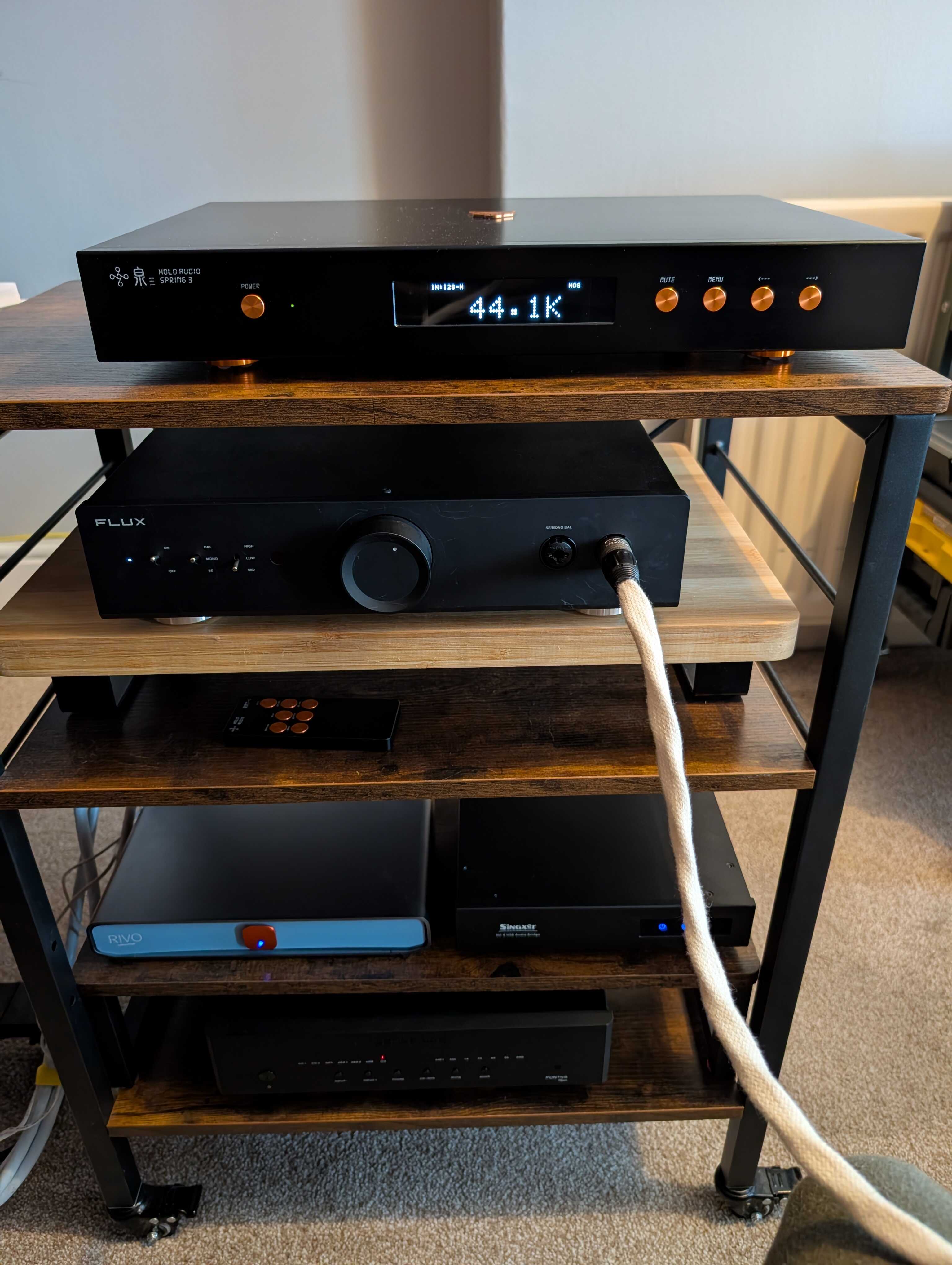
This is going to be a real tough fight between it and the Pontus 15th. They are very evenly matched to my ears, in terms of my preferences.
Initial impressions, the Denafrips has more bass weight (really well defined and controlled), the Holo has sharper images (not necessarily more realistic, just more clearly defined and discrete). Stage size is similar with the Denafrips ever so slightly more relaxed. Both do depth well. No clear winner. Will hold off drawing any conclusions until Sunday, depending on how much listening I am able to do.
10 Likes
Also, dont forget galvanized isolation and (preferably imo) not using USB power. Both make massive differences and can be done for pretty cheap with quite minimal downsides ime
3 Likes
Yes that’s probably the most important, I just took that as a given lol
2 Likes
Im needing a rec for a gaming setup for my desktop. Is the schiit stack (modi + magni) still the budget king for this sort of use case? Really just not sure what has came out in the past few years that might be worth looking at, It doesn’t have to be separates either.
To give a little more info, I just need a dac/amp solution for my desktop pc, primarily for when I feel like getting a little more intimate with my gaming sessions. I will be using my HD 6xx for now but in the near future I might get something a little more expensive, thinking maybe a audeze. If anyone has recs for that i will take those too.
I dont need anything too grand and footprint is the most important aspect, I dont have a ton of desk space. Sound comes second but I am looking for something that has good value.
2 Likes