Diagnosing ground/power issues

Following on from these comments this is a thread for discussing or getting help with any kind of signal noise or interference and various ways of treating it.

I’ll kick off.

One of my go to tools for dealing with a piece of noisy equipment in my chain is a Stageline FDA-102. It’s extremely effective as a very simple way to add a ground lift without any drop in volume.

I also have a couple of direct injection boxes, of which I prefer the Palmer PAN 04 but I find the signal attenuation sometimes hard to work with.

What is everyone else using or do you have other ways of avoiding noisy signals?

3 Likes

I think it’s important to understand what causes various noises, by far the most common noise in most systems is caused by what is termed a ground loop. What a ground loop is, is more than one source of ground in a system with a Voltage offset between them. This usually manifests itself as a 50/60Hz hum, but it can manifest in other ways.

To give an example, most DAC’s have at least 3 sources of ground, the one from the wall through the IEC connector, the input to the DAC USB or other (unless it’s optical), and the output, the Input comes from the source PC/Streamer/DDC etc, the output one from the Amp.

The only real way to diagnose a ground loop is to remove as many sources of ground from a system as possible, then add them back in one at a time.
Transformer based couplers like those @Gothique links to can remove direct coupling and ant DC offsets between components.
I have power cables with the ground pin cut off (this is easier to do in Europe where the plug isn’t usually part of the power cable), there are risks associated with this, but it’s generally safe to do for testing.

Basically start with everything you can including the source disconnected unplugged (not just turned off) from the amp, if you still have the hum you can try and lift the ground on the power, but generally if that doesn’t work, you are down to trying isolation transformers, or different circuits in your house or someone elses.
Plug things back in 1 by 1 listening for the hum, once you hear it, you need to start eliminating possible grounds either at the wall or between the components.

Why you should not leave a component with the ground lifted. If you do identify an issue that is fixed by lifting ground at the wall, you should get a real solution, a HumX or one of the Ifi Ground Eliminators. Most electronics with metal cases have ground tied to the case, this is done partly for isolation, but also so that in the unlikely event the component fails in such a way that the case would go live your circuit breaker will immediately blow.

The MOST common source of issue will be USB from your PC if you use one, and you might get different noises including hums, whines, noises when you move the mouse, it might be worse if you game. The only real fix to this is to not connect to the noisy USB port, you might have less noisy hubs on your motherboard or you may have to resort to a D2D converter or optical from the motherboard.

7 Likes

Ohhh man I wish I had been in this forum about 3 months ago.

Had some nasty issues to deal with in our single family home, built in 2004. Looks like old tenants had a home theater system built into the structure and had some sort of major electrical failure. About 1/2 of the outlets in 2 main rooms have black scoring marks on 1 socket per outlet. Those black scored sockets do not work, but the other socket (no scoring) do work. I don’t have a multimeter and the landlord isn’t interested in troubleshooting.

I’ve already had:
-major ground loop hum/hiss/swish in Klipsch powered speakers connected to PC / USB audio interface.
-loud 60hz hum from fridge compressor.
-bathroom fan on/off sometimes creates a “pop” in main room powered audio gear
-ground loop noise between 4k tv / powered speaker system that was so bad it was unworkable

And the big, big deal for us–

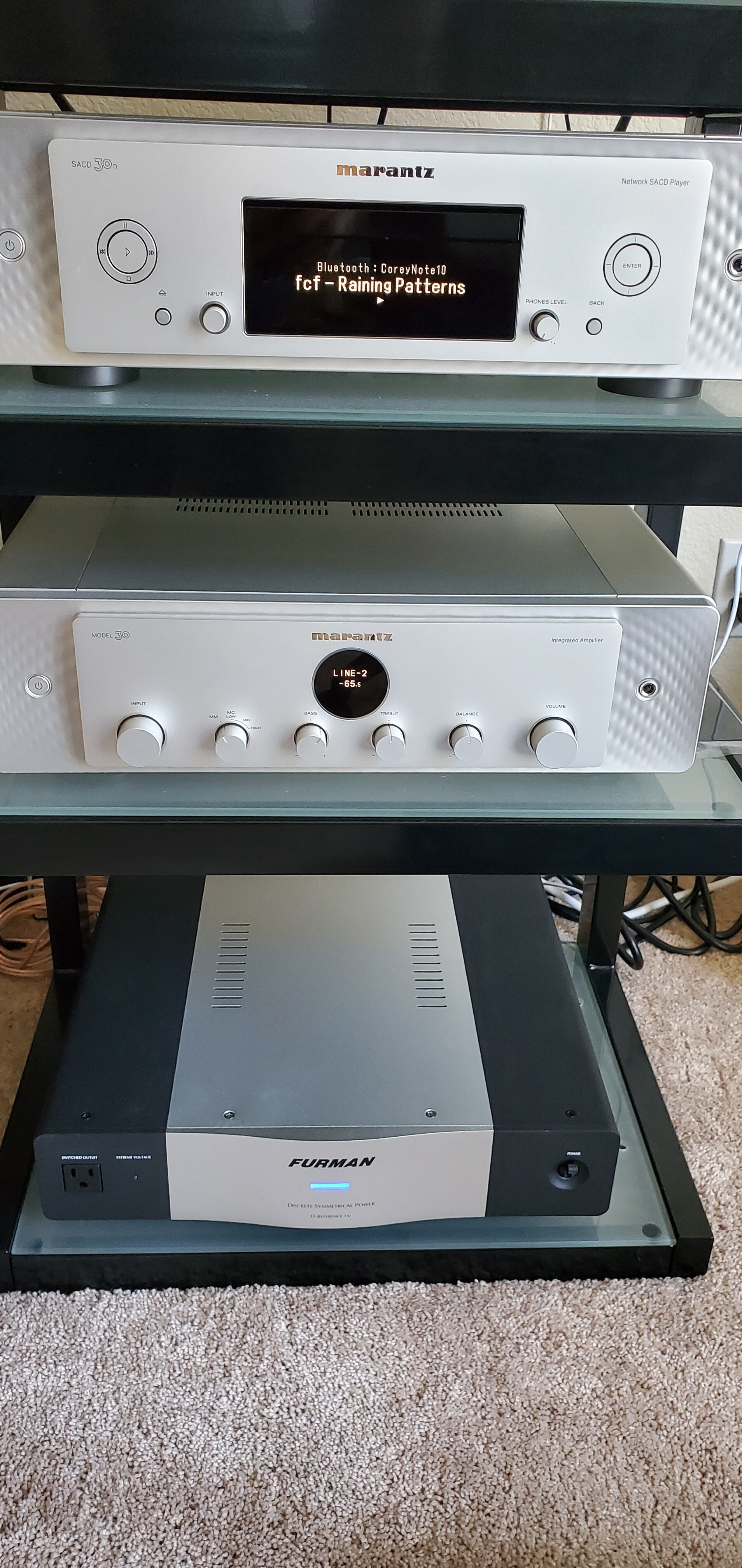
-brand new Marantz Model 30 + SACD 30n in our bedroom began going into power protection mode, requiring full disconnect / reconnect from power to regain function. This really started stressing me out, as I can’t do much to fix these electrical issues without engaging an electrician and stepping on the landlord.

We saw the power issues before buying the Marantz, so we bought a Audioquest Powerquest 3 conditioner / filter ($300) for the bedroom. The Powerquest 3 was not adequate and the protection mode continued to happen.

So after weeks and weeks of research and conversations with vendors, we went big and got the Furman IT reference 15i - a full isolating transformer / power supply that needs an outlet on a 15/20amp circuit.

Issue resolved. Not only has the Marantz not had a single issue since installing this, but the upper frequencies coming from the system and overall image of the sound has been improved. The Furman immediately improved the sound, revealing the true dirtiness of this city grid + damaged house power.

Could we have solved this for less $$? Yeah, probably. If I had a meter and had the data on exactly what is wrong inside this house, I might have been able to find a repair solution, but frankly the Furman device is a lifetime investment that will protect our cherished hifi. We still have minor ground loop noise on PC audio interfaces connected to powered speakers, but the big issue is resolved.

Turns out, on top of bad internal wiring house by house, city power grids are fairly dirty! I hadn’t realized that before this experience.

My clean, totally protected baby:
5 Likes

That sounds like an electrician should have a good look at whatever is going on.

4 Likes

Ill say i have a lot of gripes about my current living situation but the house wiring is good. Never had an issue with hifi or guitar gear. Even with some equipment being antennas the worst ive gotten is pc noise.

2 Likes

One thing I have definitely learnt from audio forums is how much dirtier domestic power supplies outside western Europe are. Makes me feel quite privileged to take it for granted.

2 Likes

Dirty power supplies, done dirt cheap.

3 Likes

Agreed. We are probably going to move in the next 2 years, so I’m probably going to hold off on spending my own $$ for this house’s issues, but it definitely could use an electrician. Ive lived in 50+ year old apartment buildings that had cleaner (house) power than this.

On the bright side, my Furman unit was able to power on successfully, which means it is getting 15+ amps of good enough power. =P Problem solved!!! :rofl: (it is NOT solved. Dont listen to me. Its just worked around)

3 Likes

Properly designed equipment with proper wiring between components is 99.999% of the solution. The other 0.001% sucks major ass.

For the technically inclined, this is a good primer on ground loops:

3 Likes

I had a ground loop recently, a source connected directly via RCA to amp and same source going optical into a wyred4sound reclocker, then via SPDIF coax into DAC and then RCA into amp. There was also a streamer connected to DAC via USB.

When investigating, the loop was solved by either disconnecting the direct RCA from source to amp or to disconnect the USB of the streamer to DAC. Disconnecting the coax from 1st source to DAC did not change anything although I was expecting it to be cause its in the loop but it doesn’t seem to work like that…

Anyways, this topic helped me, I didn’t want to put some cheap device on the USB to DAC as that is my main path. I ordered the transformer that was mentioned, plugged it in the direct RCA flow and my problem is completely gone now!

4 Likes

Glad that solved it!

I find that such a useful bit of kit to have in the cupboard. If I ever hit this problem I can always have a fast solution to break the ground loop. Sometimes I have then gone on to solve the loop in other ways or used it in the chain for several months. I believe there is an XLR version too and unlike DI boxes there is no loss in line level.

2 Likes